
If you run social media for a hotel, a restaurant or a salon, you may have heard that POV video works without being able to say exactly why. We also cover why POV is not a cure-all, and how to choose between it and other formats.
What is POV video? The definition, and why social media has taken to it
POV (point of view) video is shot from the first-person, subjective viewpoint of whoever is filming or featured. Because the camera becomes the line of sight, the viewer doesn't watch events on the far side of a screen — they experience the footage as though they were there.
It began as a technique in film and music video, but with the spread of vertical short-form on TikTok, Instagram Reels and YouTube Shorts it has moved quickly into social media marketing. Because it suits industries where the experience itself is the value — hotel room tours, the experience of walking into a restaurant, a treatment at a salon — it has become one of the main formats in day-to-day social media management.
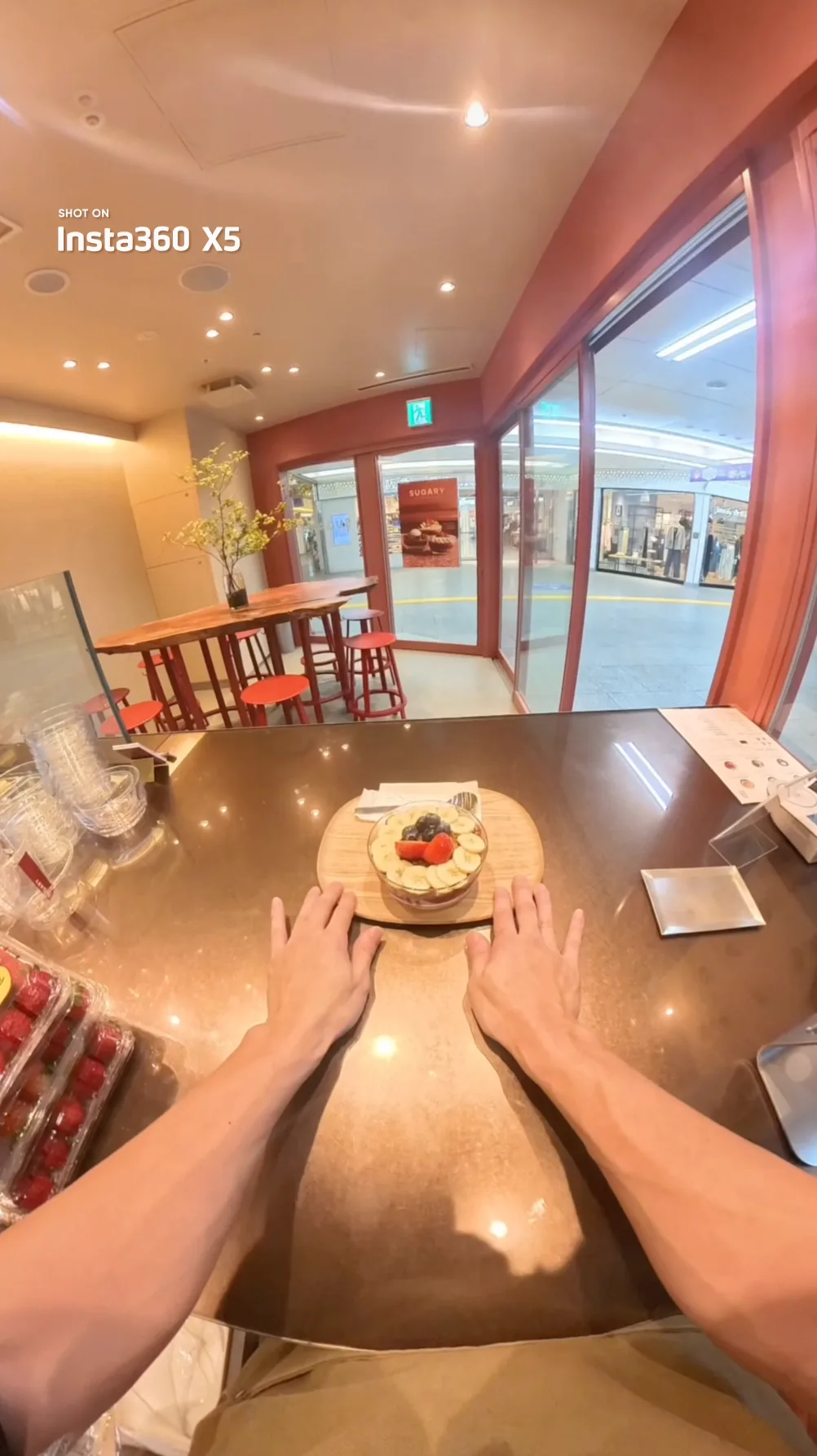
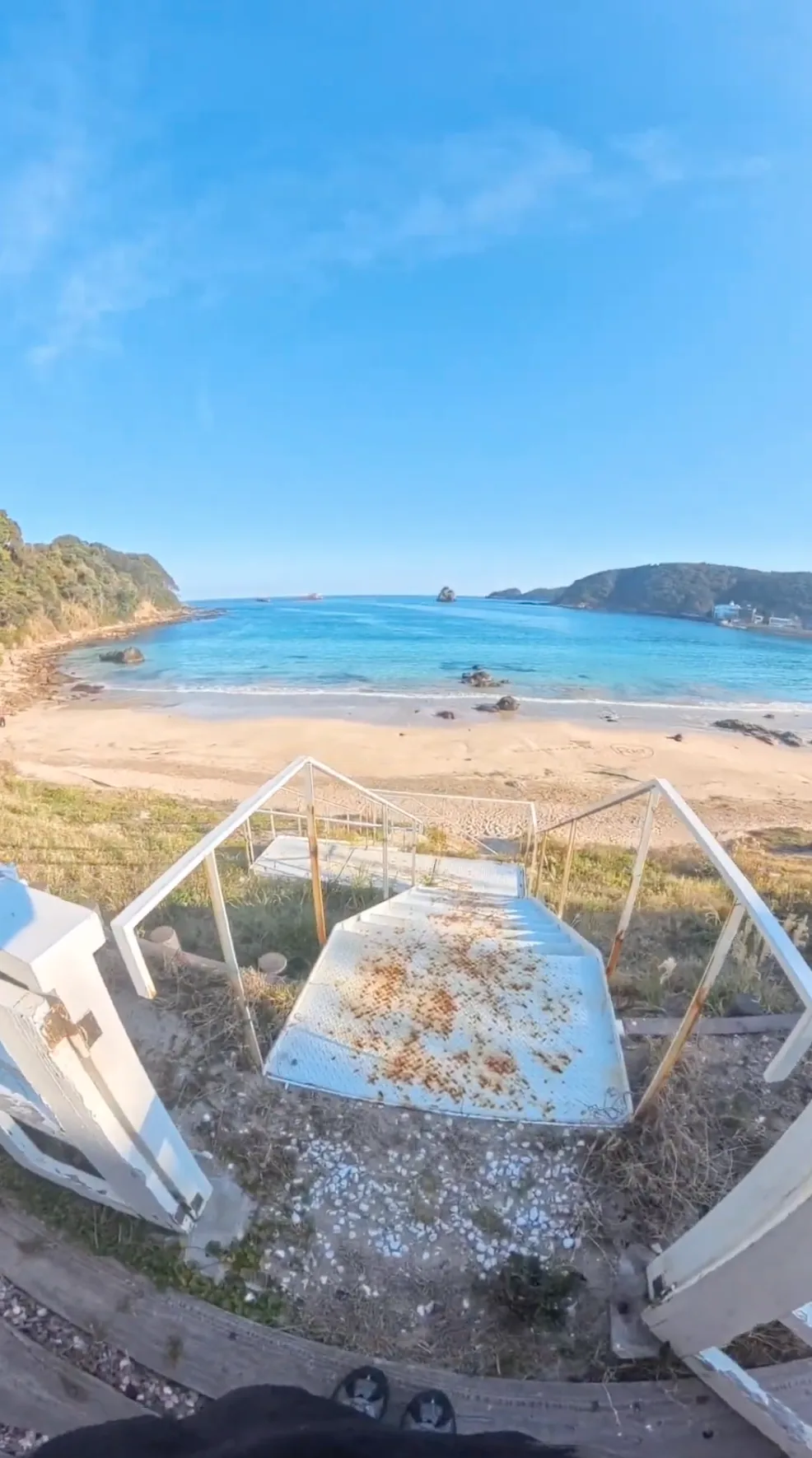
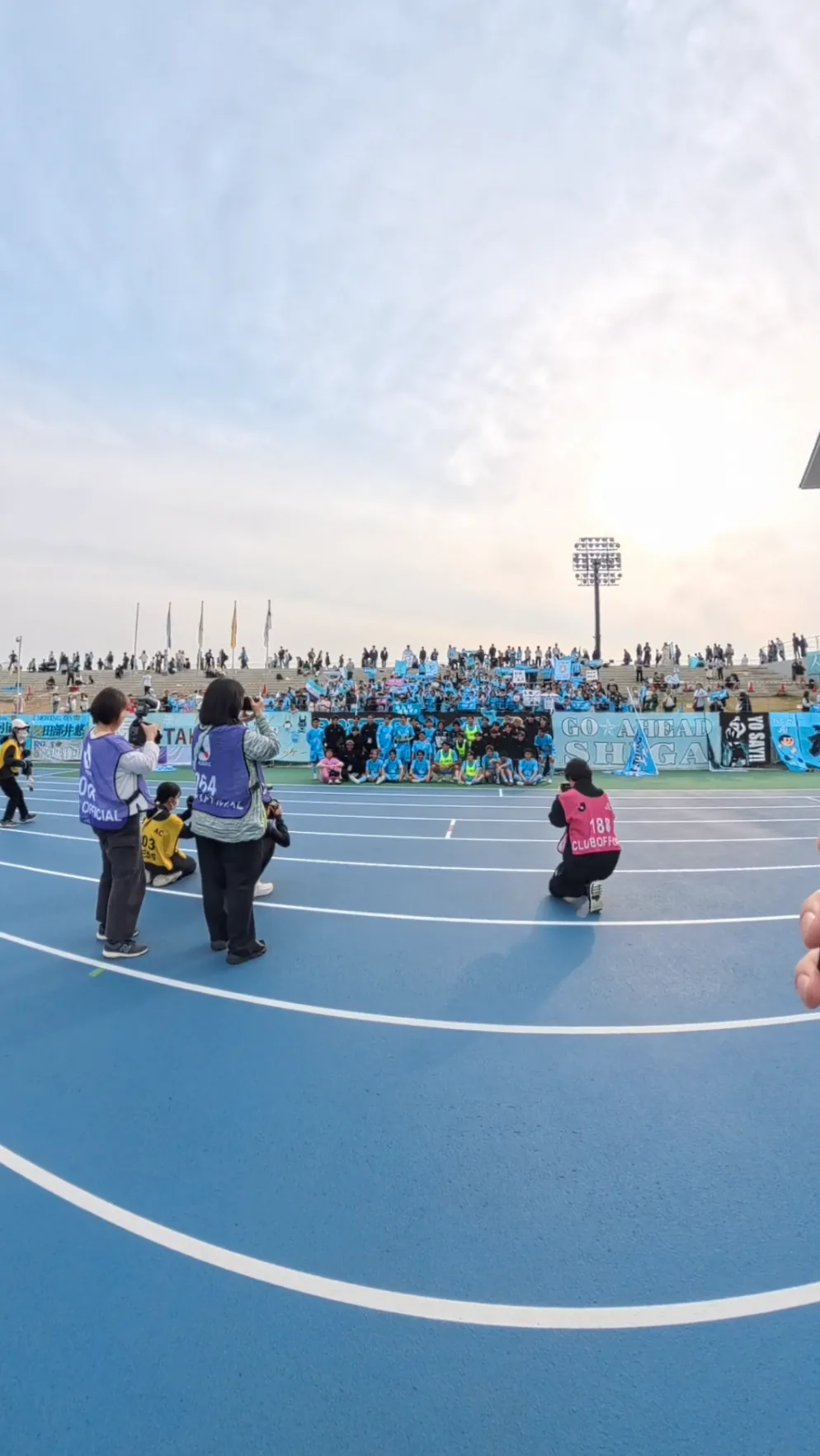
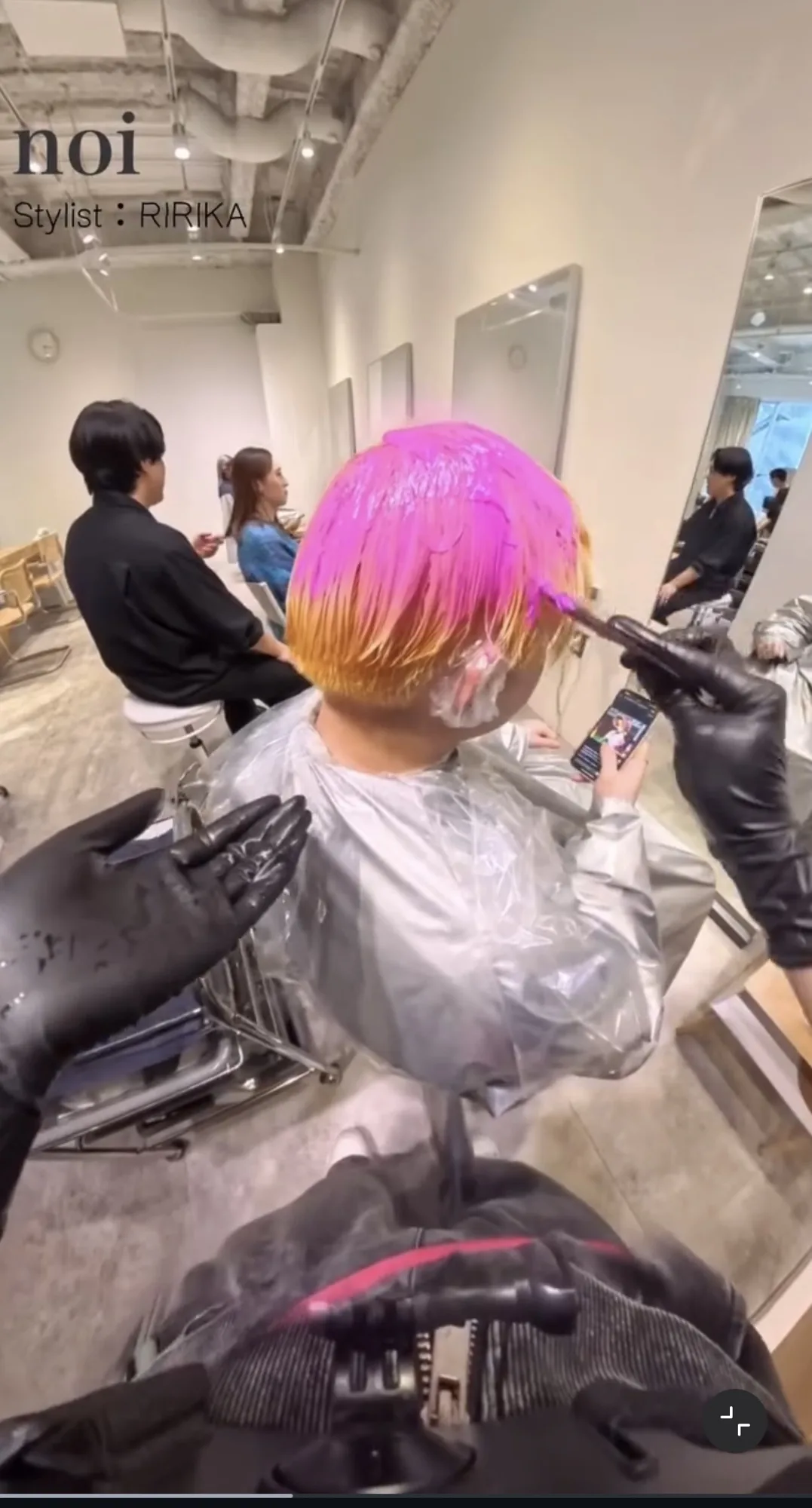
So why has it grown from a filming technique into a format people talk about as genuinely advantageous? Here are three advantages, seen from the practical side of running accounts.
Advantage 1: the economics of attention — a view is worth more than the view count says
View count is the number everyone reaches for, but the metric that actually matters is attention time per view.
Why attention time matters
Even a strong Reel typically holds a viewer for five to ten seconds, and dropping off within the first few is common. Running more than fifteen POV accounts, together drawing over 15 million views a month, what we consistently see is that POV content pulls viewers into the sense of being present — and holds them for 30 to 40 seconds per view.
Compare two videos with identical view counts and the POV one has earned three to six times the attention. Think of it as value = views × attention time, and an advantage appears that a leaderboard of view counts never shows.
1. Longer immersion sticks in memory
The longer someone watches, the more firmly a brand's world settles in memory. Unlike a video that lands an impact in a few seconds and ends, the sensation of having lived the experience is itself what gets remembered.
2. It drives saves and shares
The deeper the immersion, the more likely someone is to want to come back to it or show a friend, which lifts save and share rates. Since saves and shares also weigh heavily in the algorithm, that feeds back into the next round of views.
A strong typical Reelattention time per view
5–10sec
POV videomeasured across our 15 accounts
30–40sec
Advantage 2: no cast means speed, and less risk
The other defining feature of POV video is how easily it supports concepts that need no cast at all. Because the camera is the viewpoint, a video can work without anyone appearing on screen.
Compared with video that uses a cast
| Video with a cast | POV video (no cast) | |
|---|---|---|
| Production flow | Concept → casting → agency negotiation → legal review → shoot scheduling | Concept → storyboard → shoot |
| Typical time to delivery | 4–6 weeks | As little as 7 business days |
| Risk from the cast | Scandal can force a pull-down, with reputational fallout | Essentially none |
| Internal approval | Requires explaining a specific real person | Decidable from a brief and a storyboard alone |
| Revisions | May require rescheduling the cast | Any scene can be swapped individually |
1. Delivery in as little as seven business days
With a cast, everything after the concept — selection, agency negotiation, legal review, scheduling — typically takes four to six weeks. POV removes that whole stage, so delivery can come in as little as seven business days. Social media trend cycles move fast, and that gap in speed is directly a competitive advantage in not missing the moment.
2. Cast risk goes to zero
Whenever there is a cast, there is the standing risk of having to pull a published video because of a scandal. With no cast to begin with, POV removes that risk structurally.
3. It clears internal approval more easily
Because there is no need to explain who will appear, decision-makers can judge from a brief and a storyboard. The stricter the approval process — local government, a large chain — the more this difference counts in practice.
Advantage 3: low-cost volume turns hits into a matter of probability
POV video typically costs ¥30,000 to ¥80,000 per piece, which makes twenty a month realistic. That contains an answer to the hardest problem in running social accounts: you never know in advance what will land.
Why volume is a strategy
Even within one format, who a video reaches and how they respond changes idea by idea. You cannot predict with certainty which one will land. Which is exactly why it matters to produce enough volume that a hit comes out of the system itself.
POV, being cheap to produce at volume, fits that strategy well. Because the per-video cost stays low, you can try many different angles at twenty a month, and raise the odds of producing a hit — a million-plus views, a top-ranking save rate.
1. A hit becomes a reusable advertising asset
Once a piece of POV creative lands, it can go on serving as ad material, holding its value for roughly two years. Not ending at a one-off, but rolling the winning pattern out and reusing it, is part of what makes low-cost volume worthwhile.
2. A failed idea costs little
With per-video cost kept down, an idea that misses is a limited loss. The real strength of a volume approach is being able to turn what the miss taught you into a quick improvement on the next one.
Struggling to build the capacity to produce at volume?
We handle POV concept, filming and editing in-house, end to end. Get in touchhere (free).
Which industries POV suits, and what we have delivered
POV video does not suit every product equally. It fits best in accommodation, restaurants, beauty, tourism, Real estate, entertainment and other industries where the experience itself is the product. Each page covers how to shoot and how to run it for that industry. The more a business has moments that make a viewer think “I want to go there” or “I want to try that,” the more the first-person view has to offer.
Results
15M+ views
Monthly views across 15+ of our own accounts, on zero ad spend
6.3M views
Sugary, an açaí bowl shop. Launch campaign; 370 job applications
23K followers
A salon. Two months in, graduate applications up 30×
1M views ×2
Shimoda View Hotel. Two videos that led to bookings
Each of these came from combining what POV does well — conveying the value of an experience in first person — with the strengths of the industry itself. The more a business sells an experience, the more readily POV turns into real outcomes: bookings, applications, hires, not just views.
The 370 applicants at the restaurant and the 30× jump in graduate applications at the salon came from showing the actual workplace rather than a job listing. We run that as Recruitment Marketing, and social media hiring support for restaurants, Recruitment marketing for salons set out how it works in each industry. To run the same footage in several languages for inbound visitors, see Inbound Tourism Marketing.
The downsides and caveats: why POV is not a cure-all
Having covered the advantages: POV is one format among many, not the single right answer.
When POV may not be the best choice
- When the product or service is highly specialized, and putting a real face — an expert, a staff member — front and center builds more trust
- When you want maximum reach by riding a current social trend — an audio track, a dance, a comic exchange
- When the brand calls for a strongly narrative treatment with a person deliberately at the center
In cases like these, a cast-led or trend-led concept may fit better. POV's strength is specifically in letting someone vicariously live an experience in first person. Combining it with other formats according to your product, goal and persona is the shortest route to getting the most out of your social media program as a whole.
POV video
Industries where the experience is the value
First-person immersion sparks “I want to go there” and “I want to try that”. Hotels, restaurants, salons, tourism.
Cast-led video
Products where expertise and trust decide the sale
When putting an expert or a staff member front and center builds more trust.
Trend-led concepts
When maximum reach is the goal
When you want to ride a current trend — an audio track, a dance, a comic exchange.
Film it yourself, or bring in professionals?
Filming POV is not difficult; a phone or an action camera will do. Trying it yourself first, to see whether the format suits what you sell, is a perfectly sensible approach. Turning it into results, though, takes concept design — which persona, which experience, along which path — and the production capacity to generate hits. POV as a filming technique and POV as a marketing operation call for different things, and when you get serious, consider talking to a partner who has the production capability.
In summary
We have looked at POV video's advantages along three axes: the economics of attention, the speed and reduced risk that come from having no cast, and low-cost volume turning hits into a matter of probability. There is the value of attention time that view counts hide, a seven-business-day turnaround that only exists because there is no cast to schedule, and twenty videos a month from which a winner emerges. Each is a practical reason your social media results improve.
POV is not a cure-all, though. Depending on the product and the objective, a cast-led or trend-led concept can be the better fit. Deciding which format suits you requires a concept-design perspective that accounts for your industry and your competitive situation.
TripClear Inc. was the first social media marketing company in Japan to become an official partner of Insta360, the world's leading 360° camera maker, and has an in-house production capability built specifically around POV video. We specialize in social media management for experience-led industries — accommodation, food and drink, beauty, tourism — handling concept, filming, editing and posting end to end.
Talk to us about POV video and social media management
If you want to try POV but aren't sure it fits your business, or your current setup isn't producing anything that lands, a free consultation can start from the direction of the concept itself.
Book a free consultation →